
Long-term neutron measurements at Marquardt
June 2025
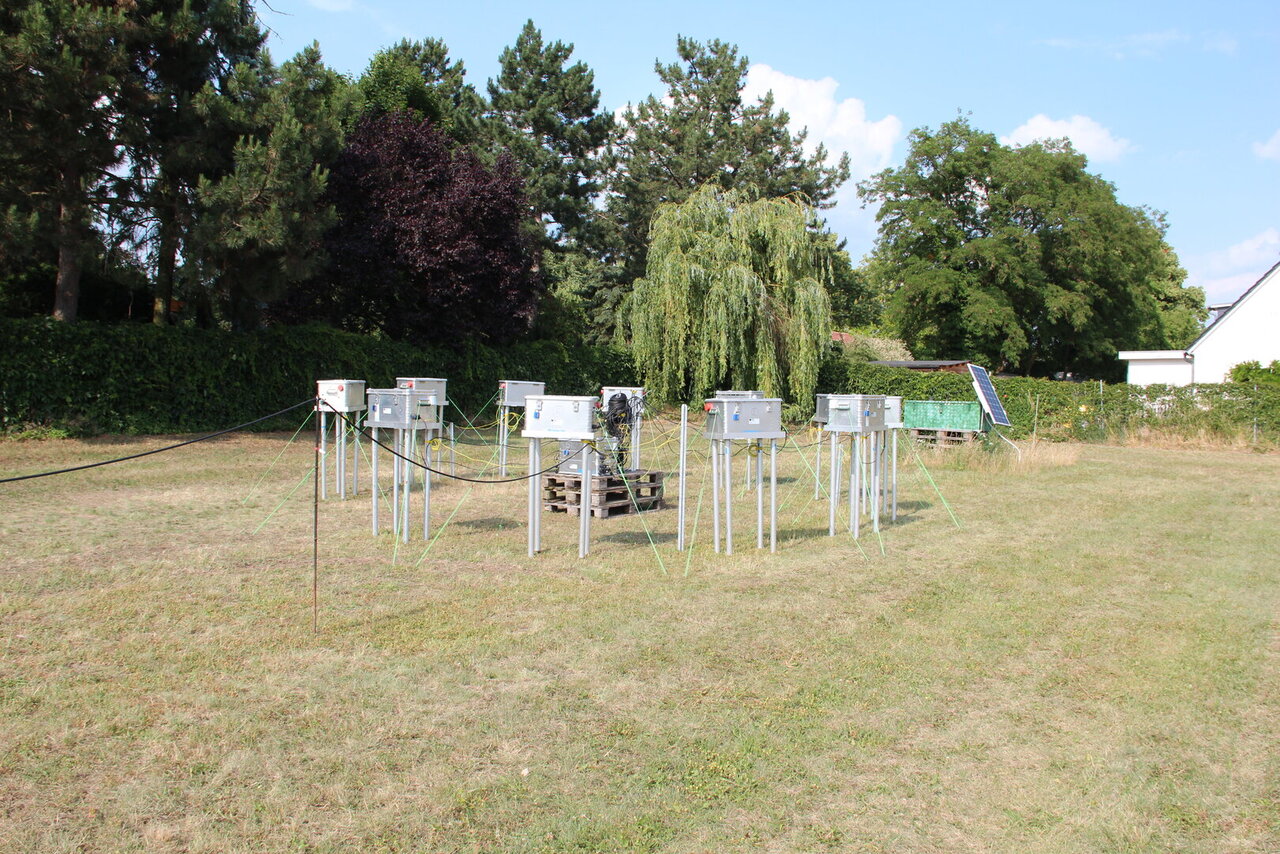
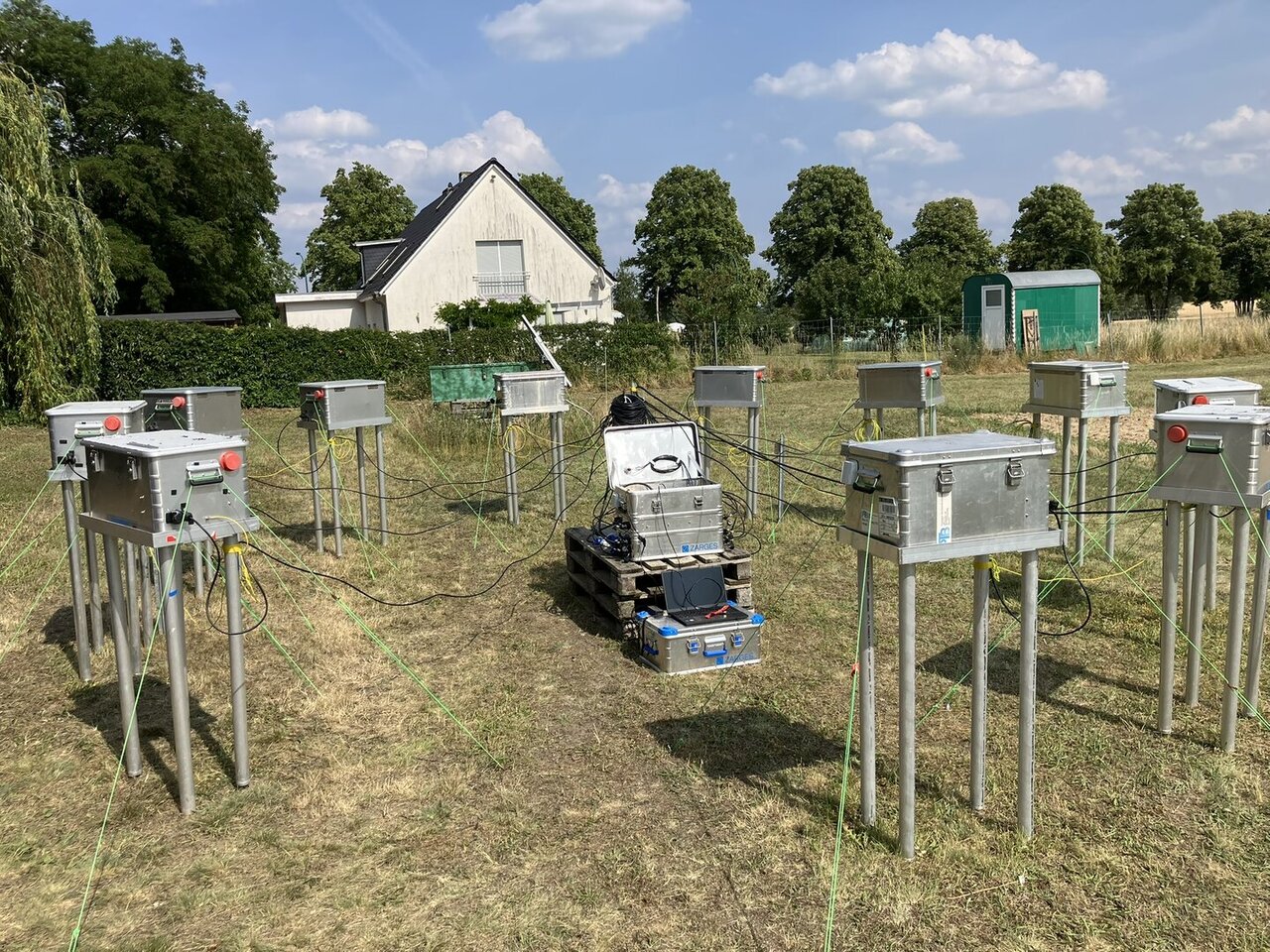
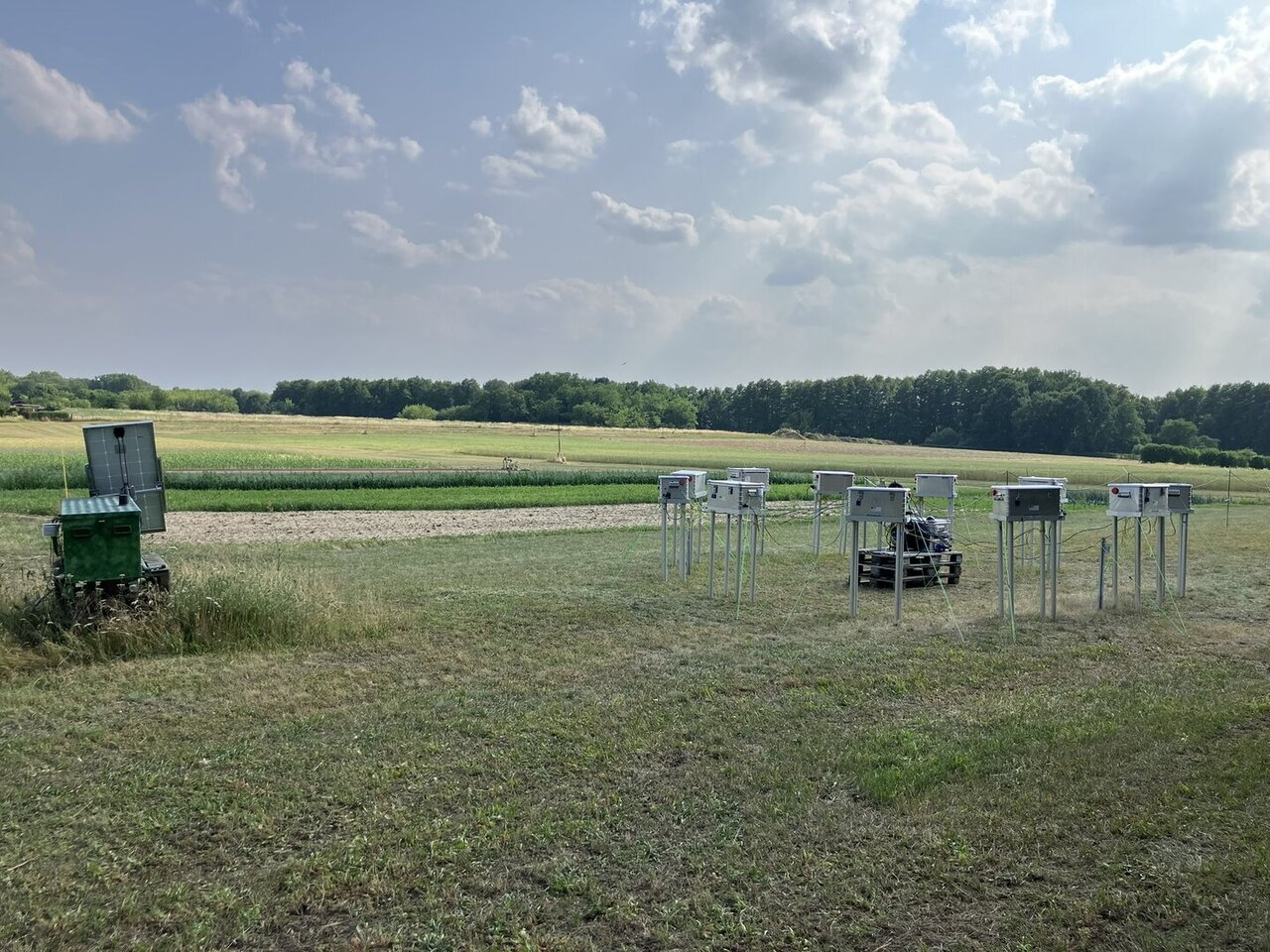
On 18 June 2025, PTB installed its newly developed NEMUS-UMW extended-range Bonner sphere spectrometer at the Marquardt test field site near Potsdam, Germany. The system was positioned approximately nine metres from one of the permanent cosmic-ray neutron sensing (CRNS) stations operated by the University of Potsdam.
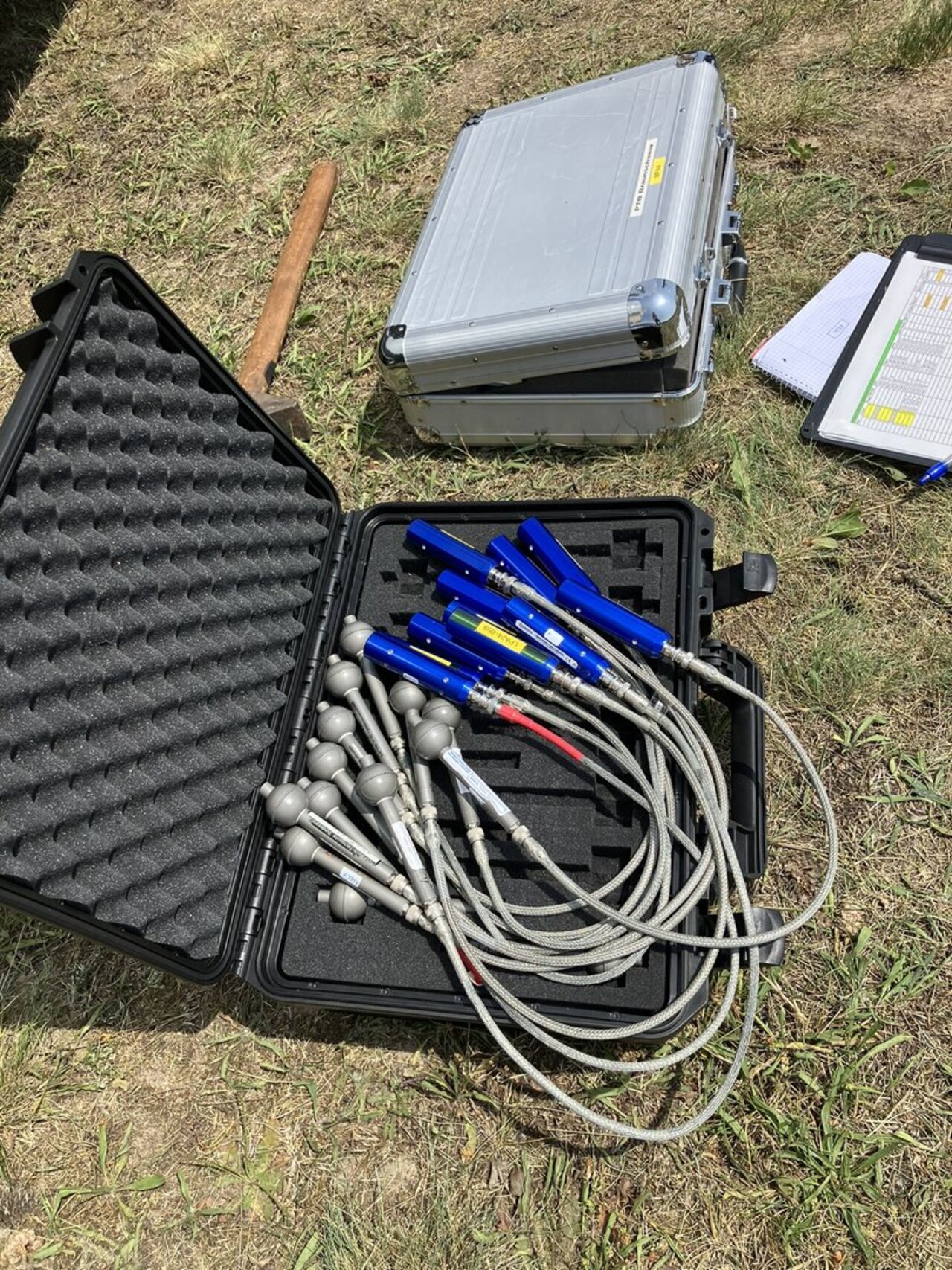
NEMUS-UMW was developed within SoMMet as an SI-traceable environmental version of PTB's established NEMUS spectrometer. It was specifically designed for automated, long-term neutron measurements under outdoor conditions. Eleven neutron detectors in different Bonner spheres were read simultaneously and synchronously. The system operated autonomously and transmitted measurement data to a PTB server every 30 minutes.
The response functions of the individual detectors were characterised and validated in PTB's neutron reference fields. This allowed the environmental neutron spectrum to be determined in absolute neutron-fluence units. The measurement campaign continued without technical interruptions until approximately mid-December 2025, providing around 26 weeks of continuous data. During this period, the system operated reliably under changing weather conditions, including heat, high humidity, heavy rainfall and storms.
The long-term measurements captured clear changes in the neutron spectrum following rainfall and changes in soil moisture. The resulting time series were compared with data recorded independently by the neighbouring CRNS station and used to evaluate neutron-transport simulations. This demonstrated the potential of NEMUS-UMW to provide reference data for validating CRNS measurements under outdoor conditions.
Further information about the instrument, measurement campaign and results is provided in SoMMet Deliverable D3.